
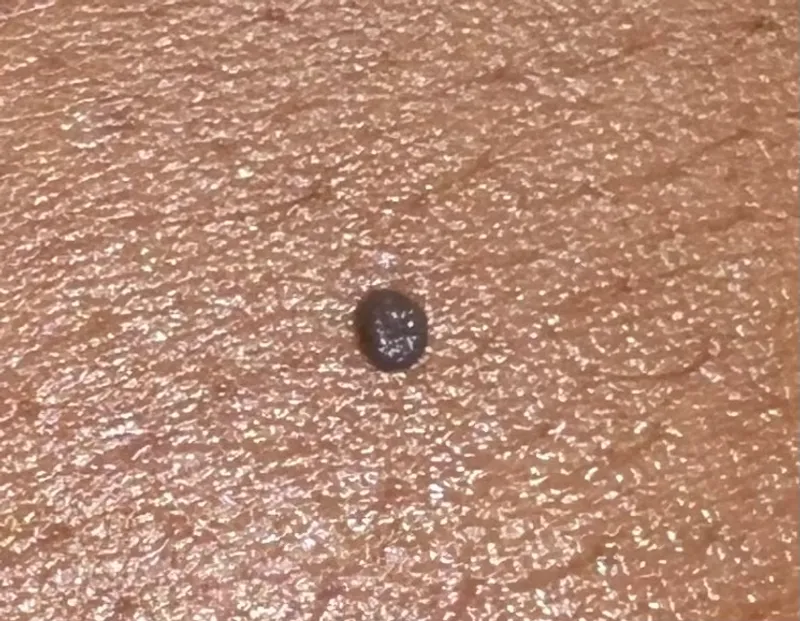
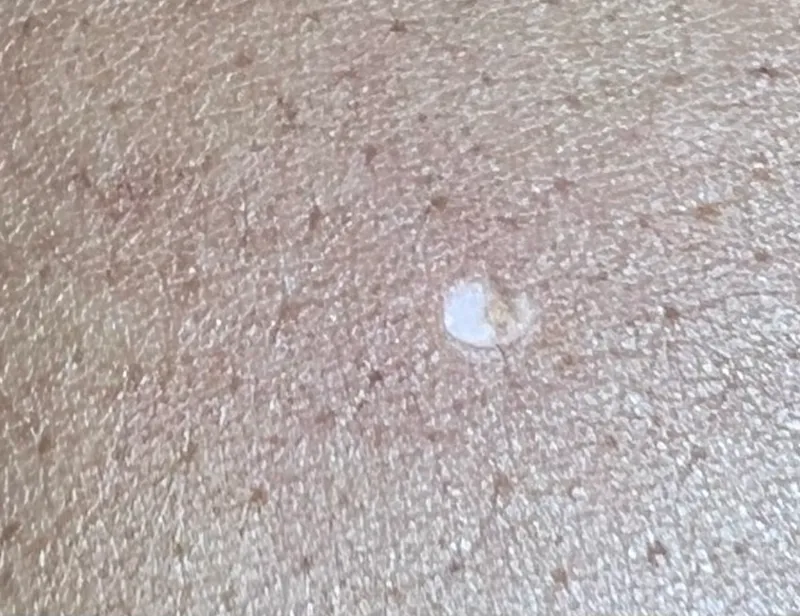
Milia Removal
Remove small white bumps from the face.
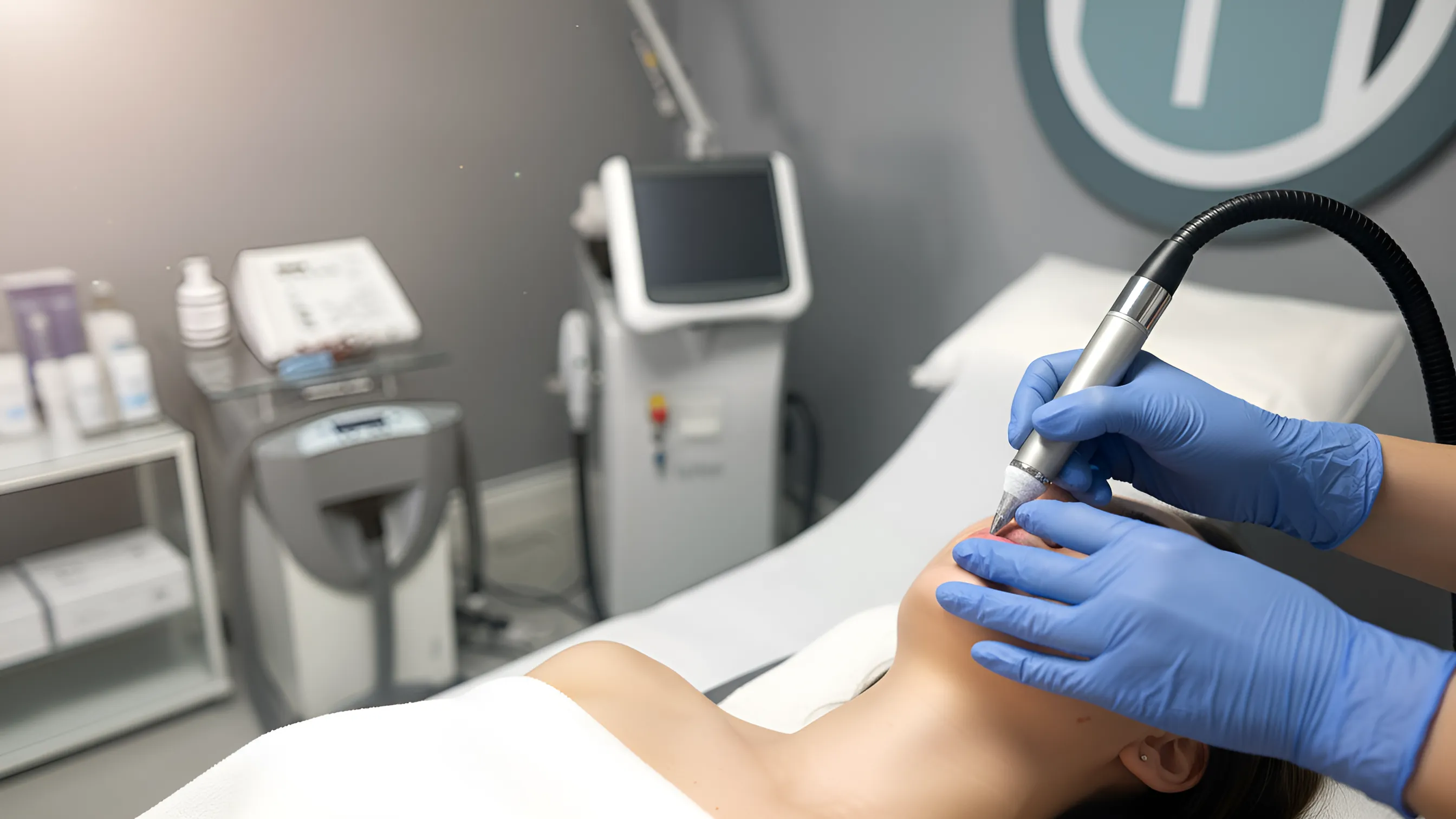
Skin tags are harmless but can be annoying, especially when they catch on clothing or jewellery. Kathryn offers quick, safe removal of skin tags and minor skin lesions.
 Best Results
 1-3 Treatments
 Treatment Time
 30 Minutes
 Recovery
 14 Days
 Complications
 Low
 Anaesthetic
 Not Required
 Cost
Cost From £110
Initial consultation required first
Before booking this treatment you'll need an initial consultation, so Kathryn can assess your suitability and keep your treatment safe. The £35 consultation fee is credited toward your first treatment. Book your consultation below.
Sick of that skin tag catching on your necklace or snagging your collar? Skin tags might be harmless, but they're incredibly annoying. That one on your neck that keeps getting caught. The ones under your arms that rub against your clothes. The embarrassment when someone notices one on your face.
Skin tag removal uses cauterisation, cryotherapy, or surgical excision to eliminate benign growths that catch on clothing and jewellery. Mode Laser Skin Clinic removes multiple tags in a single session, with treated sites healing within 7-10 days. Removed skin tags do not return to the same location.
Skin tags (medically called acrochordons) are small, soft, benign growths that hang off the skin on a tiny stalk. They're extremely common—almost half of all adults have at least one—and they tend to increase with age. While they're not dangerous, they can be a constant irritation and source of self-consciousness.
Understanding Skin Tags:
Skin tags typically appear in areas where skin rubs against skin or clothing:
• Neck — The most common location. Skin tags here often catch on jewellery, collars, and scarves.
• Underarms — Friction from arm movement and clothing makes this a prime location for skin tag development.
• Under the breasts — Particularly common in women, where underwire or bra bands create friction.
• Eyelids — Small skin tags can appear on or near the eyelids, affecting appearance.
• Groin and bikini area — Underwear elastic and movement create the friction that encourages skin tags.
• Face — Though less common, facial skin tags are often the most bothersome cosmetically.
What Causes Skin Tags:
Several factors contribute to skin tag development:
• Friction — Areas where skin rubs against skin or clothing are most prone to skin tags. This is why they cluster in folds and creases.
• Hormones — Pregnancy often triggers skin tag development, possibly due to hormonal changes and weight fluctuation. They're also more common in people with hormone-related conditions like PCOS.
• Genetics — Skin tags run in families. If your parents had them, you're more likely to develop them too.
• Age — Skin tags become more common as we get older, though they can appear at any age.
• Weight — Carrying extra weight creates more skin folds and friction, increasing the likelihood of skin tags.
• Insulin resistance — There's a correlation between skin tags and metabolic conditions including type 2 diabetes.
Why Professional Removal is Important:
You might be tempted to remove skin tags yourself—many people try tying them off with thread or snipping them with scissors. We strongly advise against this for several reasons:
• Risk of infection — Non-sterile removal creates an open wound susceptible to bacterial infection.
• Excessive bleeding — Skin tags have a blood supply. Without proper technique, bleeding can be significant.
• Scarring — Improper removal often causes worse scarring than professional treatment.
• Misidentification — What looks like a skin tag might be something else entirely. Kathryn's training in skin cancer recognition ensures proper assessment before any removal.
Removal Methods at Mode Laser Skin Clinic:
Kathryn selects the most appropriate removal method based on the skin tag's size, location, and your skin type:
• Cauterisation (heat) — The most common method. A fine probe delivers heat to the skin tag's stalk, severing it and sealing the blood vessels simultaneously. Quick, effective, with minimal bleeding.
• Cryotherapy (freezing) — Liquid nitrogen freezes the skin tag, causing the cells to die. The tag falls off within 7-10 days. Good for smaller tags.
• Surgical excision — For larger skin tags, surgical removal with a sterile blade may be necessary. Local anaesthetic ensures comfort.
• Electrosurgery — Uses electrical current to cut and cauterise simultaneously. Effective for medium-sized tags.
Most methods allow removal of multiple skin tags in a single session, making it efficient if you have several to address. The tag is removed immediately. Immediate removal means instant relief from irritation.
The Importance of Proper Assessment:
Kathryn holds Skin Cancer Recognition qualifications, which is crucial for safe skin tag removal. Not every growth is a skin tag, and it's essential to distinguish between harmless skin tags and lesions that need medical attention. Before removing anything, Kathryn at Mode Laser Skin Clinic will:
• Visually assess the growth's characteristics
• Check for any features that raise concern (irregular shape, colour variation, recent changes)
• Confirm it's suitable for cosmetic removal
• Refer you to a GP or dermatologist if anything needs medical evaluation
This assessment isn't about being overly cautious—it's about ensuring your safety and catching anything that needs proper medical attention.
Setting Expectations:
Skin tag removal is generally straightforward with excellent outcomes. However, it's worth knowing:
• Some skin tags may leave a small pink mark that fades over time
• Larger tags may leave minimal scarring (usually less noticeable than the original tag)
• Removed skin tags don't grow back from the same spot
• New skin tags can develop elsewhere, especially if you're prone to them
Many clients who are prone to skin tags return periodically for maintenance removal of new growths.
Kathryn's Experience:
With 20+ years of experience in skin treatments and specific training in skin lesion recognition and removal, Kathryn has removed thousands of skin tags safely and effectively. She'll assess your skin tags honestly, recommend the best removal method, and carry out the procedure with the precision that comes from decades of experience.
Real results from Mode Laser Skin Clinic clients
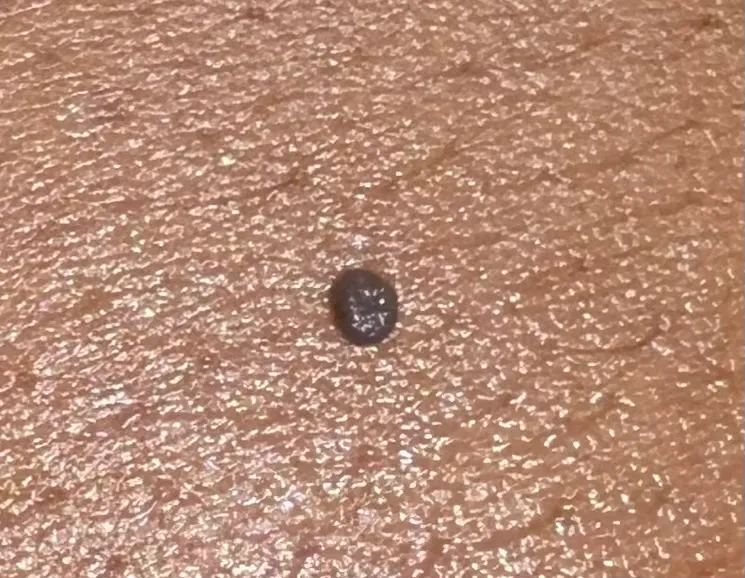
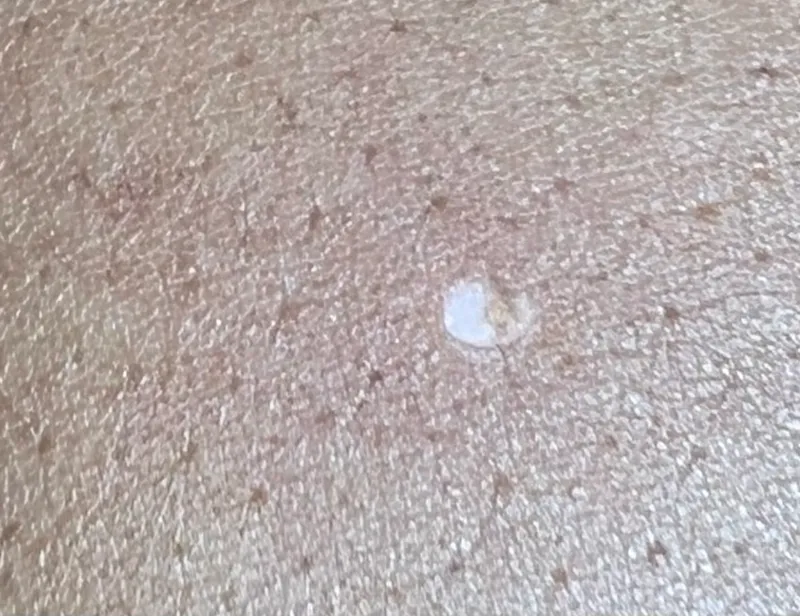
1 / 2
There's brief discomfort during removal. Local anesthetic can be used for larger or sensitive tags.
Removed skin tags don't grow back. However, new skin tags can develop elsewhere.
Scarring is typically minimal. Larger tags may leave a small mark. Kathryn takes care to minimise any scarring.
Multiple skin tags can be removed in one session. Kathryn will advise based on location and your comfort.
Skin tags are almost always harmless. However, any lesion that changes should be checked. Kathryn is trained to identify concerning features.
If any of these sound familiar, this treatment could be right for you.
Skin tags that constantly catch on necklaces or clothing
Quick removal means no more irritation—the tag is gone in minutes
Visible skin tags on your neck that make you self-conscious
Removal leaves minimal scarring and restores smooth skin
Wondering if your skin growth is something to worry about
Kathryn's skin cancer recognition training means proper assessment before any removal
Multiple skin tags you'd like dealt with in one go
Several tags can be removed in a single session, saving time and repeat visits
Kathryn will examine your skin tags, assess whether they're suitable for removal, and explain which method will be used. She'll check for any features that might need medical referral.
No special preparation needed. If you're having multiple tags removed, Kathryn will discuss this with you during the consultation.
The removal method depends on the tag's size and location. You'll feel brief discomfort—a stinging or cold sensation depending on the technique. Local anaesthetic is available for larger or sensitive tags. Treatment takes around 30 minutes.
There may be a small wound or scab at the removal site. Keep the area clean and dry. Larger tags may need a small dressing for a few days.
Smaller tags are gone immediately. The site heals within 7-10 days. Any scarring is typically minimal. Removed skin tags don't grow back, though new ones can develop elsewhere.
Not sure if your growth is a skin tag? Even if you think it's harmless, proper assessment matters for safety. Without professional identification, you risk missing something that needs medical attention. Kathryn will assess it during your consultation. Her Skin Cancer Recognition training means she can identify when something needs medical attention.
Most skin tags are removed in a matter of minutes. Even if you have multiple tags to address, they can typically all be dealt with in a single session at Mode Laser Skin Clinic lasting around 30 minutes. There's no lengthy procedure or extended appointments—you'll be in and out with your skin tags gone. Finally, you can stop living with the irritation that's been bothering you for months or years.
While you'll feel a brief sensation during removal—a quick sting or cold feeling depending on the method—the discomfort is momentary and very tolerable. For larger or more sensitive tags, local anaesthetic is available to ensure complete comfort.
No more wincing every time your necklace catches on that neck tag. No more irritation from tags rubbing against clothing or underwear. Once removed, the source of daily annoyance is simply gone—permanently from that location. The irritation stops immediately. Immediate relief means you can wear jewellery and clothing comfortably again.
The small wounds left after skin tag removal typically heal within 7-10 days. There's minimal aftercare required—just keep the area clean and dry. Most clients are surprised at how quickly and easily the removal sites heal. Even if you were worried about recovery, the healing process is simpler than most expect.
Kathryn's Skin Cancer Recognition training means every consultation includes proper assessment of your skin growths. This isn't just about cosmetic removal—it's about ensuring your safety by identifying anything that might need medical attention rather than cosmetic treatment.
Unlike treatments that require patience for results, skin tag removal is instant. The tag is gone the moment it's removed. You walk out of Mode Laser Skin Clinic with smooth skin where that irritating tag used to be—no waiting, no repeat appointments for that specific tag.
Remove small white bumps from the face.
Address age spots and sun damage.
Improve overall skin appearance.
Remove red cherry angiomas.
View treatment results and reviews.
See why patients rate Mode Laser Skin Clinic 5 stars on Google. Book your skin tag removal consultation.
Mode Laser Skin Clinic — Based within Essington Clinic