
Thread Vein Removal
Target individual visible vessels on the face.
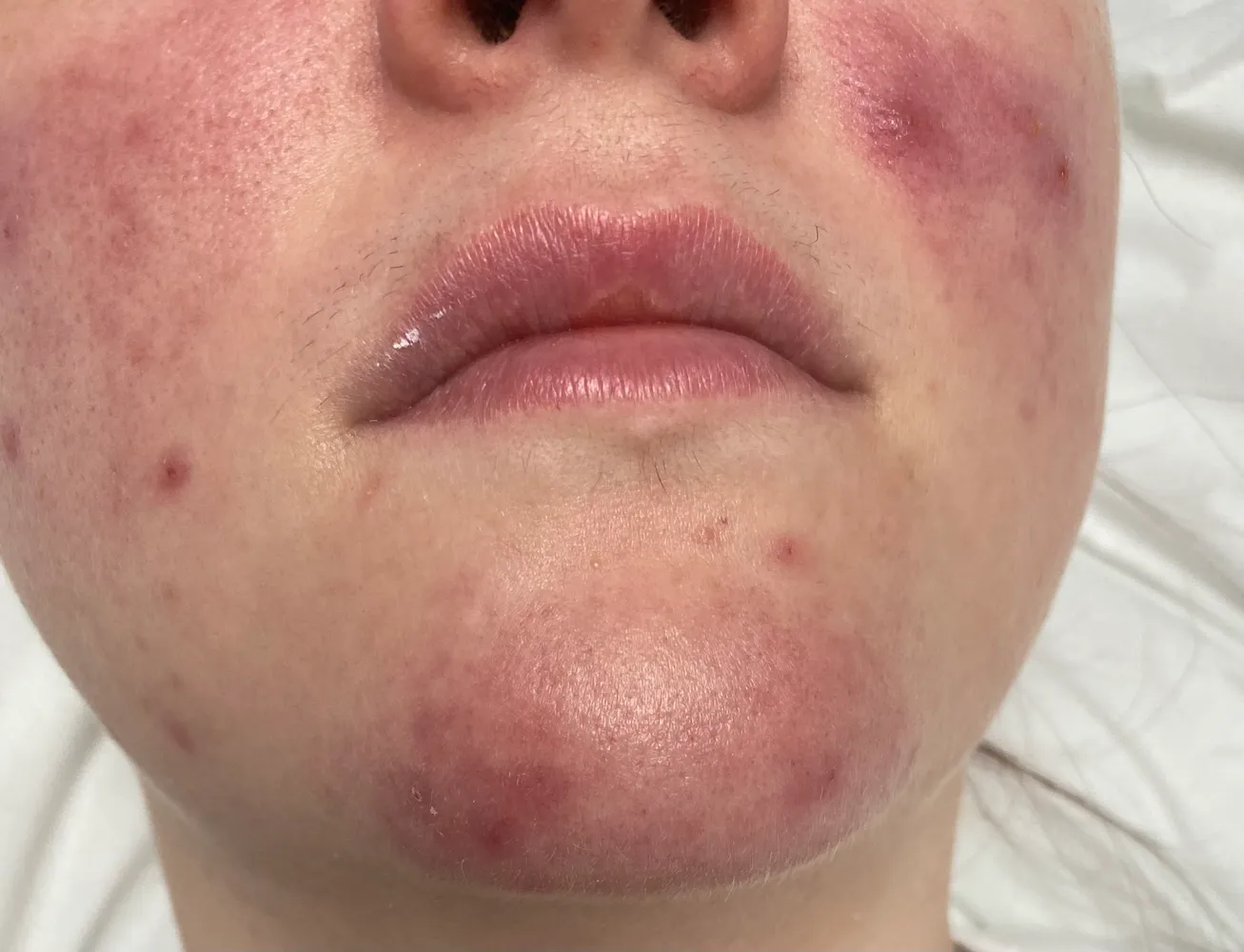
While rosacea cannot be cured, laser treatment can significantly reduce its visible symptoms. Kathryn uses targeted laser therapy to calm redness and diminish visible vessels.
 Best Results
 3-6 Treatments
 Treatment Time
 30 Minutes
 Recovery
 24-72 Hours
 Complications
 Low
 Anaesthetic
 Not Required
 Cost
Cost From £120
Initial consultation required first
Before booking this treatment you'll need an initial consultation, so Kathryn can assess your suitability and keep your treatment safe. The £35 consultation fee is credited toward your first treatment. Book your consultation below.
Exhausted by the constant facial redness that makeup just can't cover? Living with rosacea means dealing with more than just 'rosy cheeks.' It's the self-consciousness when someone asks if you're embarrassed. The frustration of flare-ups that strike without warning. The endless parade of creams and products that help a little but never really solve the problem.
Rosacea laser treatment targets the dilated blood vessels causing persistent facial redness and visible veins. The LUMINA® system delivers light absorbed by haemoglobin, collapsing permanently enlarged capillaries that topical treatments cannot address. Most clients see significant redness reduction after 2-4 sessions.
Rosacea is a chronic inflammatory skin condition that affects an estimated 10% of the population, though many don't realise that's what they have. It typically appears as persistent redness across the central face—cheeks, nose, chin, and forehead—often accompanied by visible blood vessels, flushing episodes, and sometimes spots or bumps. While it can't be cured, it can be managed far more effectively than most people realise. Laser treatment at Mode Laser Skin Clinic can significantly reduce the visible symptoms that topical products simply can't address.
Understanding the Different Types of Rosacea:
Rosacea isn't one-size-fits-all. There are several subtypes, and understanding yours helps determine the best treatment approach:
• Erythematotelangiectatic Rosacea (ETR) — Persistent facial redness and flushing, often with visible blood vessels. This is the type that responds best to laser treatment.
• Papulopustular Rosacea — Acne-like breakouts (bumps and pimples) alongside redness. This often needs medical treatment before laser is appropriate.
• Phymatous Rosacea — Thickening of the skin, particularly on the nose (rhinophyma). This requires different interventions.
• Ocular Rosacea — Affects the eyes, causing irritation and redness. This needs specialist eye care.
Most people Kathryn sees have ETR—the redness and vessel type—either alone or combined with mild papulopustular symptoms. This is the presentation where laser treatment makes the biggest difference.
What Causes Rosacea:
The exact cause of rosacea isn't fully understood, but several factors contribute:
• Vascular dysfunction — Blood vessels in the facial skin become hypersensitive, dilating easily and struggling to constrict. Over time, some remain permanently dilated and visible.
• Inflammatory response — The skin's immune system overreacts to various triggers, causing chronic low-grade inflammation that manifests as redness.
• Demodex mites — These microscopic mites live on everyone's skin, but some evidence suggests people with rosacea may have elevated populations or heightened sensitivity to them.
• Genetics — Rosacea runs in families, particularly in those with fair skin and Northern European ancestry.
• Environmental triggers — Sun exposure, temperature extremes, alcohol, spicy foods, stress, and certain skincare products can trigger flare-ups in susceptible individuals.
How Laser Treatment Addresses Rosacea:
While creams and prescription medications can help reduce inflammation and prevent some flare-ups, they cannot address the permanently dilated blood vessels causing persistent background redness. This is where laser treatment excels. The laser targets visible vessels. Targeted vessels collapse and are absorbed by your body over the following weeks.
Mode Laser Skin Clinic uses the LUMINA® laser system to target the visible vessels contributing to rosacea redness. The laser delivers controlled pulses of light that are absorbed by the haemoglobin in the blood. This converts to heat, damaging the vessel walls and causing them to collapse.
For diffuse background redness (where individual vessels aren't clearly visible), IPL (Intense Pulsed Light) is often used. This broader-spectrum light treats larger areas of general redness, evening out skin tone and reducing the overall flushed appearance.
What Laser Treatment Can Achieve:
It's important to be realistic about what laser can and cannot do for rosacea:
• Can achieve: Significant reduction in background redness, elimination of visible thread veins, reduced flushing frequency in some clients, improved skin tone and appearance, reduced need for heavy makeup coverage
• Cannot achieve: A permanent cure (rosacea is a chronic condition), prevention of all future flare-ups, treatment of spots and bumps (these need medical treatment first), elimination of all triggers
Most clients see a noticeable reduction in redness after 2-4 sessions, with many reporting their skin looks calmer than it has in years. However, because rosacea is chronic, maintenance treatments every 6-12 months are often needed to sustain results.
Why Rosacea Skin Needs Special Care:
Rosacea skin is typically sensitive and easily irritated. This means treatment needs to be approached carefully. Kathryn uses gentler settings for rosacea treatment than she would for straightforward thread vein removal, monitoring your skin's response and adjusting accordingly. She also times treatments to avoid active flare-ups when the skin is most vulnerable.
The Role of Trigger Management:
Laser treatment works best as part of a comprehensive rosacea management approach. Kathryn will discuss your known triggers and help you identify patterns. Common triggers include:
• Sun exposure (often the biggest trigger)
• Temperature extremes—hot weather, cold wind, hot baths
• Alcohol, particularly red wine
• Spicy foods
• Hot drinks
• Stress and emotional triggers
• Certain skincare ingredients (especially fragrances and alcohol-based products)
Understanding and avoiding your personal triggers can help reduce flare-up frequency and extend the benefits of laser treatment.
Kathryn's Approach to Rosacea:
With over 20 years of laser experience at Mode Laser Skin Clinic, Kathryn has helped many rosacea sufferers achieve calmer, clearer skin. She understands both the physical challenges of the condition and the emotional impact of living with constant facial redness. During your consultation, she'll assess your rosacea type, discuss your triggers and goals, and give you an honest assessment of what treatment can realistically achieve for your specific situation.
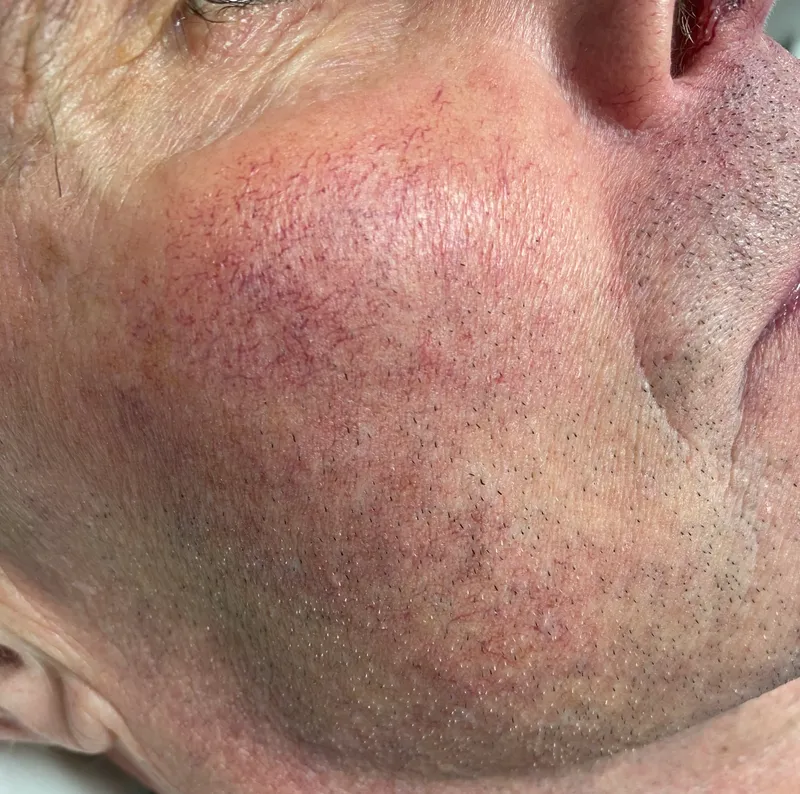
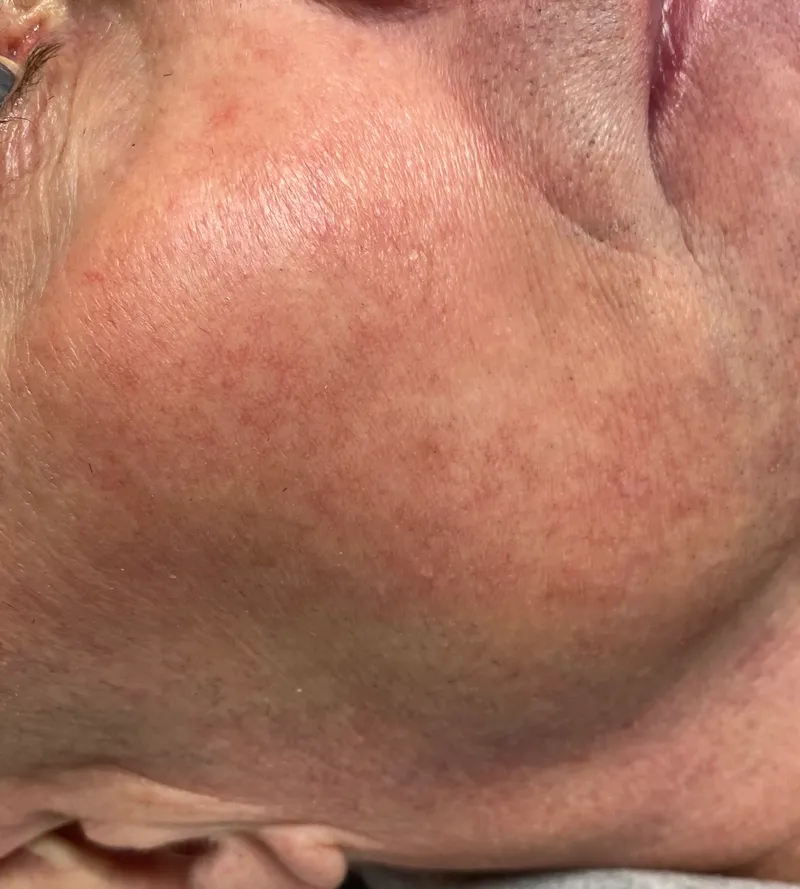
Real results from Mode Laser Skin Clinic clients
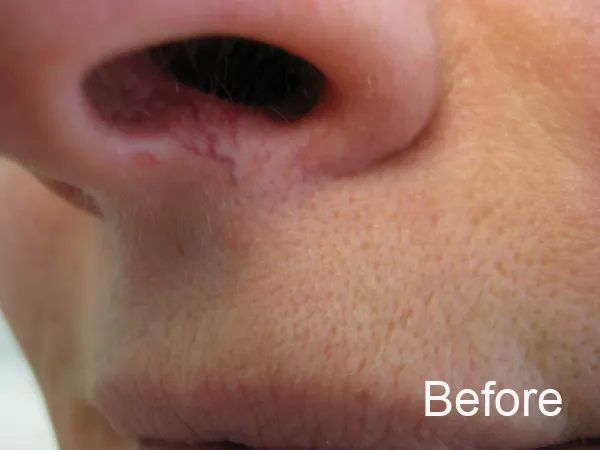
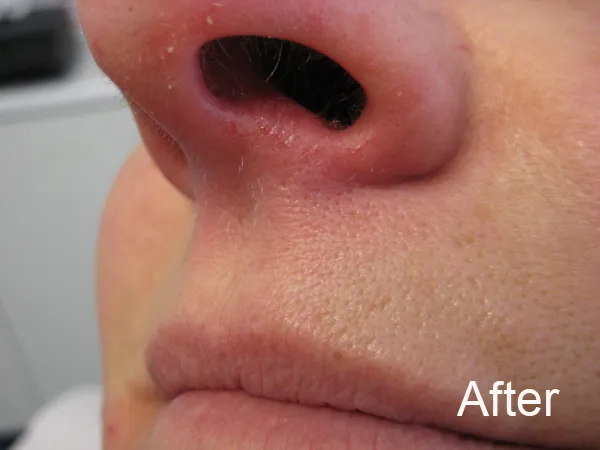
1 / 2
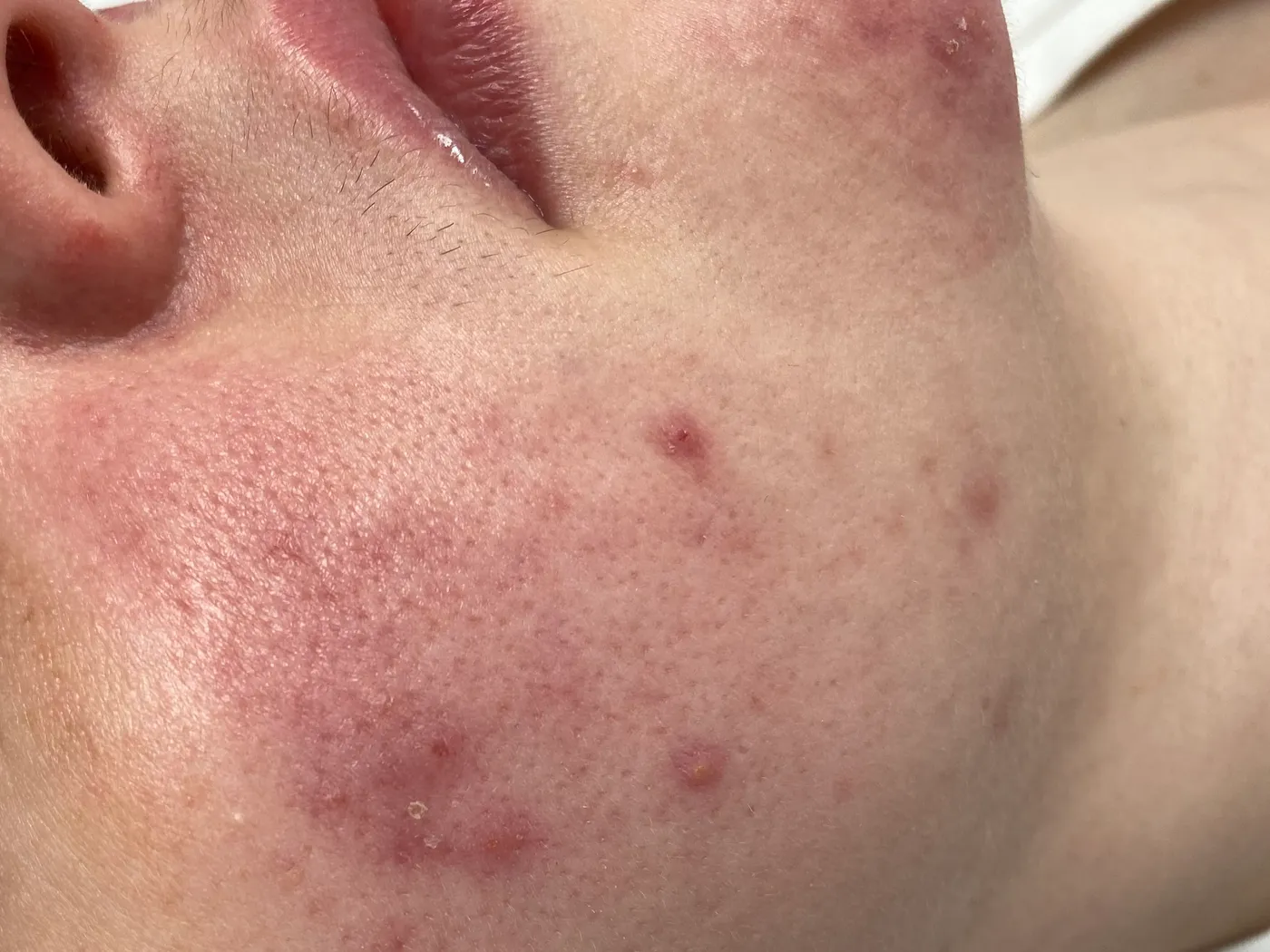
Rosacea on the cheek
No, rosacea cannot be cured. However, laser treatment can significantly reduce visible symptoms like redness and blood vessels, often for extended periods.
Most clients see improvement after 2-4 sessions. Maintenance sessions may be needed every 6-12 months depending on your rosacea.
When performed carefully on appropriate candidates, no. Kathryn uses gentle settings and assesses your skin's response to minimise any risk of triggering a flare.
Rosacea-affected skin can be sensitive. Most clients describe mild warmth and tingling. Kathryn adjusts treatment for your comfort.
Results vary by individual. Many clients enjoy reduced redness for 6-12 months or longer before considering maintenance treatment.
If any of these sound familiar, this treatment could be right for you.
Constant facial redness that makeup can't fully cover
Laser targets the blood vessels causing the redness—addressing the cause, not just the symptom
Embarrassing flushing when you're stressed, hot, or drink wine
Treatment reduces baseline redness and can decrease flushing frequency
Visible spider veins across your cheeks or nose
Laser collapses these vessels—your body absorbs them and they disappear
Tried every cream and nothing's worked long-term
Laser offers results that creams can't achieve—targeting vessels that topicals can't reach
Kathryn will assess your rosacea type and severity, discuss your triggers, and explain what results you can realistically expect. She'll recommend how many sessions you'll need.
Avoid sun exposure for 2-4 weeks before treatment. Avoid triggers that cause flare-ups in the days before your appointment. Arrive with clean skin.
The laser is carefully applied to affected areas. You'll feel mild warmth and tingling—Kathryn uses gentle settings for sensitive rosacea skin. Sessions take around 30 minutes.
Temporary redness and warmth is normal—like a mild sunburn. Some clients experience slight swelling. This typically settles within 24-72 hours. Cool compresses help.
Redness reduces gradually over 2-6 weeks as your body absorbs the treated vessels. Most clients see significant improvement after 2-4 sessions. Maintenance may be needed every 6-12 months.
Unsure if your redness is rosacea or something else? Even if creams haven't worked, laser targets the blood vessels causing redness rather than surface inflammation. Without proper assessment, you risk treating the wrong cause. Kathryn can assess your skin during a consultation and recommend the best treatment approach for your specific condition.
Laser treatment targets the dilated blood vessels responsible for persistent redness, reducing the flushed, ruddy appearance that characterises rosacea. Most clients at Mode Laser Skin Clinic see a noticeable calming of their complexion, with background redness reduced to levels they haven't experienced in years. Finally, your natural skin tone can show through.
Those thread-like veins across your cheeks and nose that makeup can't hide are individually targeted and collapsed by the laser. As your body absorbs these treated vessels over the following weeks, they simply disappear—giving you the clearer, more even skin tone you've been trying to achieve with concealer. The vessels collapse during treatment. Collapsed vessels are gradually cleared by your immune system.
While laser doesn't prevent all flare-ups (rosacea remains a chronic condition), many clients report that their triggers affect them less severely after treatment. With fewer permanently dilated vessels, there's less baseline redness for flare-ups to build upon. Even if complete prevention isn't possible, severity often decreases significantly.
Many rosacea sufferers spend significant time every morning trying to neutralise and cover their redness. After laser treatment at Mode Laser Skin Clinic, clients often find they can significantly reduce their makeup routine—or even go without—because their underlying skin tone has improved so much.
Unlike surgical interventions for severe rosacea (like rhinophyma surgery), laser treatment is non-invasive with no incisions or needles. You'll walk out of the clinic and return to normal activities, with just some temporary redness that settles within 24-72 hours.
Laser treatment complements rather than replaces your existing rosacea management. You can continue using your prescribed creams and skincare products. In fact, they often work better after laser treatment because the underlying vascular component has been addressed.
Target individual visible vessels on the face.
Improve overall skin texture and tone.
Gentle exfoliation for sensitive rosacea skin.
Learn about our LUMINA® laser technology.
View rosacea treatment results.
Kathryn takes a limited number of new patients each month. Secure your rosacea consultation today.
Mode Laser Skin Clinic — Based within Essington Clinic