
Skin Tag Removal
Remove other unwanted skin growths.
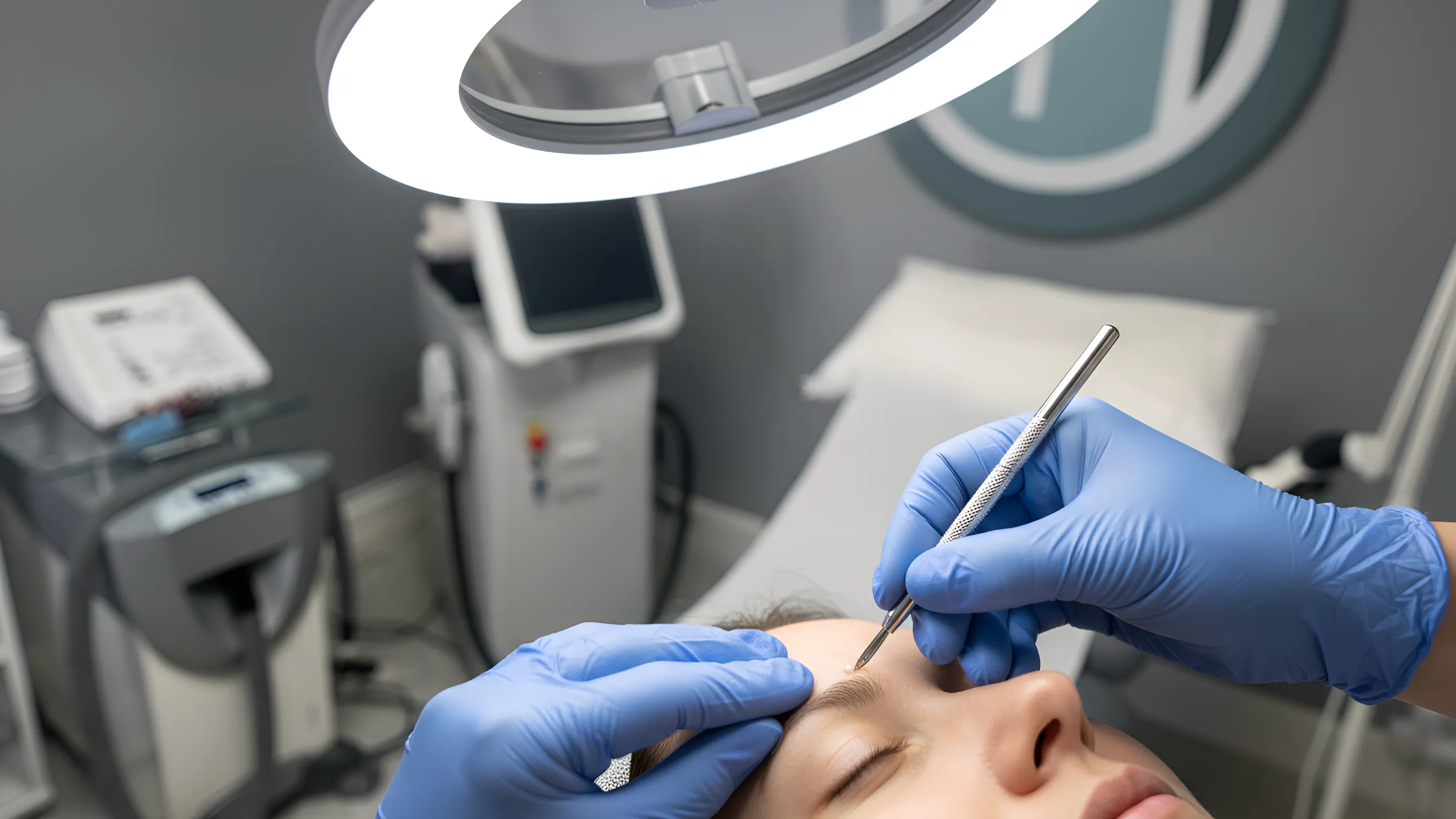
Milia are small, white bumps that often appear around the eyes, cheeks, and forehead. At Mode Laser Skin Clinic, Kathryn safely extracts milia using professional techniques, leaving your skin smooth without risk of scarring.
 Best Results
 1 Treatment
 Treatment Time
 15-30 Minutes
 Recovery
 1-3 Days
 Complications
 Very Low
 Anaesthetic
 Not Required
 Cost
Cost From £40
Initial consultation required first
Before booking this treatment you'll need an initial consultation, so Kathryn can assess your suitability and keep your treatment safe. The £35 consultation fee is credited toward your first treatment. Book your consultation below.
Have you been staring at those stubborn white bumps around your eyes for months—or years—wondering why they won't go away? You've tried exfoliating. You've tried squeezing them (and regretted it). You've tried every product that promises to dissolve them. But they just sit there, unchanged, making your skin look bumpy no matter how good your makeup skills are.
Milia removal is a precision extraction procedure for the sealed keratin cysts that appear as white bumps around the eyes. Unlike whiteheads, milia have no surface opening and cannot be squeezed—professional de-roofing with sterile instruments removes them safely without scarring.
Milia (singular: milium) are tiny, dome-shaped cysts that contain keratin—the protein that makes up your hair, nails, and outer skin layer. They appear as firm, white or yellowish bumps, typically 1-2mm in size. Unlike whiteheads or spots, milia have no opening to the skin surface. They're completely sealed beneath a thin layer of skin, which is why no amount of squeezing will shift them.
Understanding What Milia Are:
Milia are often confused with other skin conditions, but they're quite distinct:
• Milia vs. whiteheads — Whiteheads are blocked pores containing oil and bacteria. They have an opening (even if blocked) and can be extracted or will eventually clear. Milia are sealed keratin cysts with no pore connection.
• Milia vs. spots — Spots are inflammatory and usually tender. Milia are not inflamed and are completely painless to touch.
• Milia vs. sebaceous hyperplasia — These look similar but sebaceous hyperplasia has a slight depression in the centre and is caused by enlarged oil glands.
Understanding what you're dealing with is important because the treatment approach differs. Kathryn will confirm whether your bumps are milia during your consultation at Mode Laser Skin Clinic.
Why Milia Develop:
Milia form when dead skin cells become trapped beneath the skin's surface rather than shedding normally. Several factors contribute:
• Skin trauma — Burns, sun damage, blistering, or even minor injury can lead to milia formation during the healing process.
• Heavy skincare products — Rich, occlusive creams and oils can trap dead cells beneath the skin surface, particularly around the delicate eye area.
• Sun damage — Chronic UV exposure damages the skin's ability to shed cells properly, leading to milia formation.
• Genetics — Some people are simply more prone to developing milia than others.
• Ageing — As skin loses elasticity and cell turnover slows with age, milia become more common.
• Certain skin conditions — Conditions like rosacea can increase milia occurrence.
Where Milia Commonly Appear:
• Around the eyes — The most common location, particularly on the eyelids, under the eyes, and on the orbital bone. The thin, delicate skin here traps cells easily.
• Cheeks — Especially in areas where you apply heavy moisturisers or eye creams.
• Forehead — Less common but still frequently seen.
• Nose — Particularly around the nostrils.
• Chin — Sometimes clustered in groups.
Why DIY Removal is a Bad Idea:
We understand the temptation. Those little white bumps are right there, and surely a quick squeeze would sort them? Unfortunately:
• Milia have no opening — Without a pore or surface connection, there's nothing to squeeze. You'd have to break through the skin to reach them.
• Risk of scarring — Forceful extraction damages the delicate skin, particularly around the eyes. The scarring from DIY attempts is often worse than the milia themselves.
• Risk of infection — Breaking skin without sterile technique creates an infection risk, particularly near the eyes.
• Ineffective — Without proper tools and technique, you're likely to fail anyway, leaving yourself with damaged skin and milia still intact.
Professional Milia Extraction:
Kathryn uses proper medical technique for milia removal at Mode Laser Skin Clinic:
• Sterile instruments — Fine lancets and comedone extractors designed specifically for the delicate work of milia removal.
• Magnification — Proper lighting and magnification ensure precision, especially for tiny milia near the eyes.
• Controlled technique — Each milium is carefully de-roofed (a tiny nick in the overlying skin) and the keratin pearl is expressed without traumatising surrounding tissue. The keratin pearl emerges cleanly. Clean extraction means minimal trauma and faster healing.
• Minimal trauma — Professional technique means tiny wounds that heal quickly with minimal risk of scarring.
Areas Kathryn Can Treat:
Many people assume milia around the eyes can't be treated professionally—that it's too close to a sensitive area. In fact, these are exactly the milia Kathryn most commonly treats. With a steady hand, proper lighting, and decades of experience, she safely extracts milia from:
• Eyelids (upper and lower)
• The delicate under-eye area
• Orbital bone and temple area
• Cheeks and all other facial areas
Preventing Future Milia:
While you can't completely prevent milia if you're prone to them, certain steps can help:
• Use lightweight, non-comedogenic products around the eyes
• Avoid heavy, occlusive creams on milia-prone areas
• Regular exfoliation helps prevent cell buildup (but won't remove existing milia)
• Use SPF to prevent sun damage that contributes to milia formation
Kathryn can advise on skincare adjustments during your appointment.
What to Expect After Removal:
After professional extraction, you'll have tiny red marks at each extraction site. These are superficial and typically heal within 1-3 days. There's no downtime—you can apply mineral makeup after 24 hours. Most importantly, your skin will finally be smooth where those bumps used to be.
Kathryn's Expertise:
With 20+ years of experience at Mode Laser Skin Clinic, Kathryn has extracted countless milia, including those in the most delicate locations around the eyes. Her steady hand and careful technique ensure safe, effective removal with minimal risk of scarring—a far cry from DIY attempts that often end in frustration and damaged skin.
There's a brief pinching sensation as each milium is extracted. Most clients find it very tolerable.
Removed milia won't return to the same spot. However, new milia can develop elsewhere. Proper skincare can help prevent new ones forming.
We don't recommend this. Milia have no opening to the surface, and improper extraction can cause scarring or infection.
Depends on the number of milia. A few can be removed in 10-15 minutes; many more will take longer.
Milia form when dead skin cells become trapped. Rich skincare products, sun damage, and genetics can contribute.
If any of these sound familiar, this treatment could be right for you.
White bumps around your eyes that won't go away no matter what you try
Milia need professional extraction—skincare products can't remove them
Tried to squeeze them yourself but they just won't budge
Milia have no surface opening—only proper tools can extract them safely
Feel embarrassed about the bumps when people look closely at your face
Quick removal leaves smooth skin—milia are gone the moment they're extracted
Worried about scarring if you try to remove them
Kathryn's technique minimises scarring risk—unlike DIY attempts
Kathryn will examine your milia, assess how many you have and where they're located, and explain the removal process. She'll give you an estimate of treatment time.
No special preparation needed. Arrive with clean skin—no makeup on the treatment area. If you have milia near your eyes, remove contact lenses.
Using fine sterile instruments, Kathryn will carefully extract each milium. You'll feel brief pinching sensations. Treatment takes 15-30 minutes depending on the number of milia.
There may be slight redness at each extraction site, which fades within a few hours to days. Keep the area clean and avoid touching it. No makeup on treated areas for 24 hours.
Results are immediate—the milia are gone as soon as they're extracted. The small marks heal within 1-3 days. Removed milia don't return to the same spot, though new ones can form elsewhere.
Not sure if your bumps are milia or something else? Even if you've tried products without success, milia require extraction—they cannot be dissolved topically. Without proper identification, you risk treating the wrong condition. Kathryn will assess them during your consultation and advise the best approach.
Those frustrating white bumps that have been sitting on your skin for months or years—gone. Professional extraction at Mode Laser Skin Clinic removes milia completely, leaving you with the smooth skin you've been trying to achieve with products that simply can't work on sealed cysts. Finally, your skin looks as smooth as it should.
Unlike DIY attempts that often result in damaged, scarred skin (and milia still intact), Kathryn's professional technique minimises trauma to surrounding tissue. Fine sterile instruments, proper lighting, and decades of experience mean extraction is precise with minimal risk of lasting marks. The instruments are designed for this work. Designed instruments create controlled, minimal openings.
Milia around the eyes are notoriously difficult to address—too risky to attempt at home, too delicate for aggressive treatments. Kathryn's steady hand and experience mean she can safely extract milia from eyelids, under-eyes, and other sensitive areas where precision is essential. Even if you were nervous about treatment near your eyes, professional extraction is far safer than DIY attempts.
Whether you have one stubborn milium or a cluster of them, most extractions can be completed in a single appointment. There's no need for multiple visits for most clients—come in with bumpy skin, leave with smooth skin.
There's no waiting for results with milia removal. The moment each milium is extracted, it's gone. You leave the appointment with smooth skin where those bumps used to be. The satisfaction of finally seeing them gone is immediate.
Milia extraction leaves tiny marks that heal within days. There's no significant downtime—you can apply mineral makeup after 24 hours and return to normal activities straight away. Most people won't even notice you've had anything done.
Remove other unwanted skin growths.
Help prevent milia by exfoliating dead skin cells.
Improve overall skin texture and help prevent milia.
Precise treatment for facial areas.
View before and after photos.
See why patients rate Mode Laser Skin Clinic 5 stars on Google. Book your milia removal consultation.
Mode Laser Skin Clinic — Based within Essington Clinic