
Thread Vein Removal
Treat visible veins on the face.
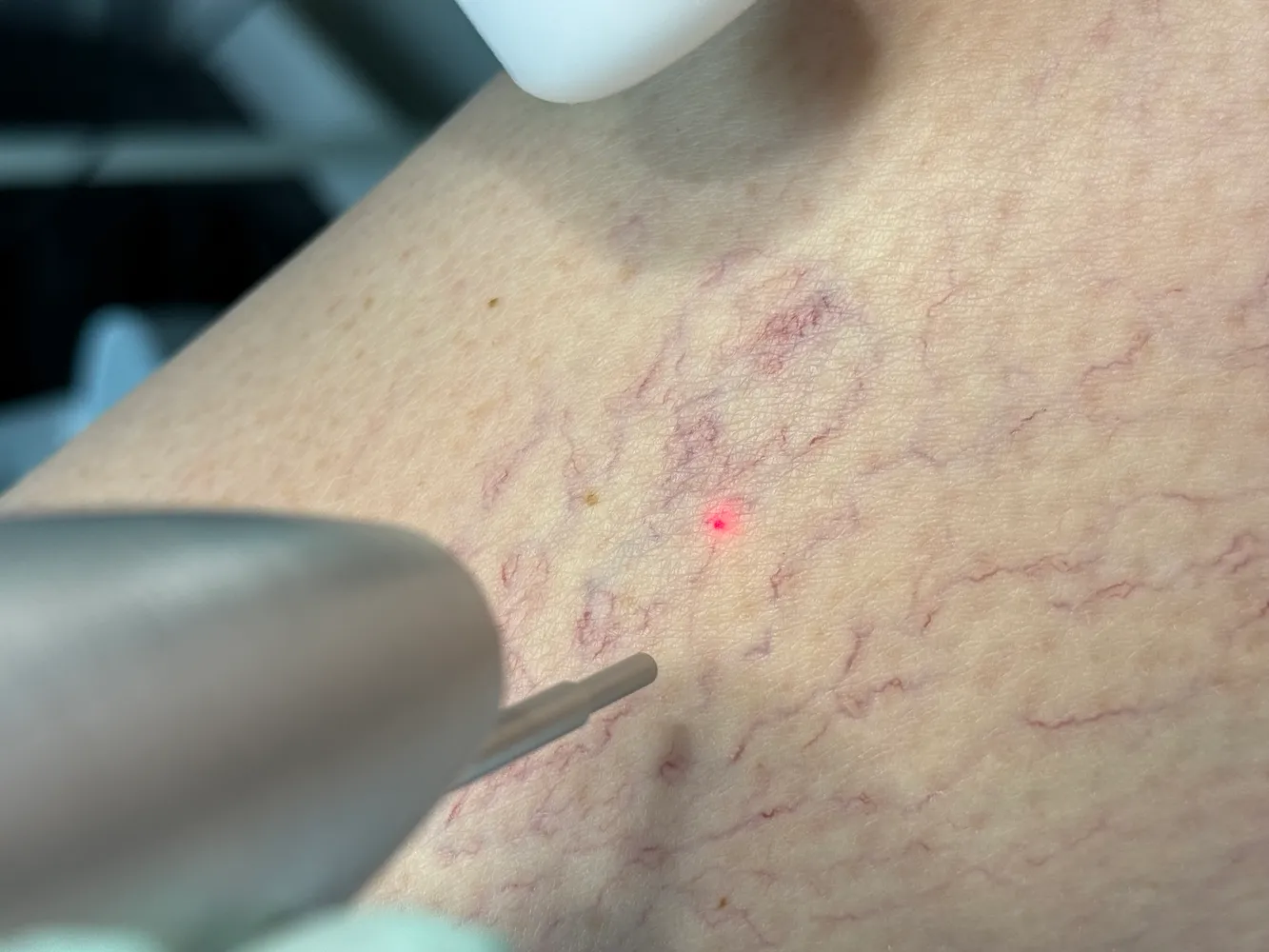
Spider veins and small varicose veins on the legs can make you self-conscious about wearing shorts, skirts, or swimwear. Laser leg vein treatment offers a non-invasive solution.
 Best Results
 2-4 Treatments
 Treatment Time
 30-60 Minutes
 Recovery
 2-7 Days
 Complications
 Low
 Anaesthetic
 Not Required
 Cost
Cost From £120
Initial consultation required first
Before booking this treatment you'll need an initial consultation, so Kathryn can assess your suitability and keep your treatment safe. The £35 consultation fee is credited toward your first treatment. Book your consultation below.
Do you avoid shorts, skirts, and swimwear because of the veins on your legs? Those red, blue, or purple spider veins spreading across your thighs or calves can make you feel self-conscious—covering up even in hot weather rather than baring your legs.
Leg vein treatment uses Nd:YAG laser technology to eliminate spider veins and small varicose veins non-invasively. The 1064nm wavelength penetrates deeper than facial treatments, reaching vessels in thicker leg skin. Most spider veins fade significantly after 2-4 sessions spaced 4-6 weeks apart.
Leg veins are incredibly common—affecting up to 60% of adults—yet many people don't realise effective treatment exists. Unlike the bulging varicose veins that may need medical intervention, cosmetic leg veins (spider veins and small reticular veins) respond beautifully to laser treatment at Mode Laser Skin Clinic. It's a non-invasive solution that requires no injections, no surgery, and minimal downtime.
Understanding the Different Types of Leg Veins:
Not all leg veins are the same, and understanding the type you have helps set realistic expectations for treatment:
• Spider veins (telangiectasia) — The most common type. These are fine, web-like clusters of red, purple, or blue vessels visible just under the skin surface. They typically appear on the thighs, behind the knees, and on the calves. Spider veins respond excellently to laser treatment.
• Reticular veins — Slightly larger than spider veins, appearing as bluish-green vessels. They're often the 'feeder' veins that supply spider vein clusters. Treating reticular veins alongside spider veins often produces better, longer-lasting results.
• Small varicose veins — Larger veins that may be slightly raised but aren't bulging or ropey. Some small varicose veins respond to laser; others may need alternative treatment like sclerotherapy or medical assessment.
• Large varicose veins — Bulging, twisted veins that protrude from the skin. These typically require medical treatment (such as endovenous procedures) rather than cosmetic laser. Kathryn will refer you appropriately if your veins fall into this category.
Why Leg Veins Develop:
Leg veins often develop due to a combination of factors:
• Genetics — If your parents had visible leg veins, you're more likely to develop them too. There's a strong hereditary component.
• Pregnancy — The increased blood volume and hormonal changes during pregnancy often trigger spider vein development. Many women notice their legs change significantly after having children.
• Prolonged standing or sitting — Jobs that involve standing for long periods (teachers, nurses, retail workers) or sitting all day (office workers) increase pressure on leg veins.
• Hormones — Oestrogen and progesterone can affect vein walls. This is why many women notice veins worsening around menstruation, during HRT, or after menopause.
• Age — Vein walls weaken naturally with age, making vessels more prone to dilation and visibility.
• Weight — Excess weight increases pressure on leg veins, contributing to their development.
How Laser Leg Vein Treatment Works:
Mode Laser Skin Clinic uses the LUMINA® laser system with Long-Pulse Nd:YAG technology—specifically designed for treating deeper vessels like those found on the legs. The laser emits light at 1064nm wavelength. This wavelength is absorbed by haemoglobin in the blood, converting to heat that collapses and seals the vessel.
Over the following weeks, your body's natural healing processes gradually absorb the collapsed vessel. It simply disappears. Because the laser targets haemoglobin specifically, surrounding skin tissue is unaffected—the energy passes through without causing damage.
Why Nd:YAG for Leg Veins:
The 1064nm wavelength used in our LUMINA® system is particularly effective for leg veins because:
• Deep penetration — Leg vessels are deeper than facial thread veins. The Nd:YAG wavelength reaches these deeper vessels effectively.
• Safe for all skin tones — Unlike some lasers, Nd:YAG doesn't rely on skin contrast. It's safe for darker skin types where other laser technologies carry pigmentation risks.
• Effective on red, blue and purple veins — The wavelength works well on the blood colours commonly seen in leg veins.
• Separate cryo-cooling — The Zimmer Cryo Cooler 6 is used alongside the laser to protect your skin and dramatically reduce discomfort during treatment. You feel the cooling before, during, and after each pulse.
Laser vs. Sclerotherapy:
Sclerotherapy (injection treatment) is another option for leg veins. Both have their place:
• Laser is non-invasive (no needles), works well on fine spider veins, and is preferred by clients who dislike injections. It's particularly effective for web-like clusters.
• Sclerotherapy can treat larger vessels more effectively and may achieve faster results on certain vein types. However, it involves multiple injections.
Many specialists consider laser ideal for finer spider veins and sclerotherapy better for larger reticular or varicose veins. Kathryn will advise which approach suits your specific veins during consultation.
Treatment Areas:
Leg veins commonly appear on:
• Thighs — Both inner and outer thighs frequently develop spider vein clusters
• Behind the knees — A very common location for spider veins
• Calves — Spider veins and reticular veins often appear here
• Ankles — Veins around the ankles can be treated, though this area may require more sessions and is one of the slowest areas to respond to laser treatment and the healing time is longer.
Setting Realistic Expectations:
Most spider veins respond very well to laser treatment, with significant fading visible after 2-4 sessions. However, results depend on several factors:
• Finer spider veins typically clear more quickly than larger reticular veins
• Deeper vessels may take longer to respond than superficial ones
• Some veins appear darker immediately after treatment before gradually fading
• Complete clearance isn't always possible, but significant improvement is typical
It's also important to understand that while treated veins are permanently removed, new veins can develop over time—especially if underlying factors like genetics, pregnancy, or occupational standing continue. Many clients return to Mode Laser Skin Clinic for occasional maintenance treatments as new veins appear.
Kathryn's Approach to Leg Vein Treatment:
With over 20 years of experience with the LUMINA® laser, Kathryn has treated thousands of leg veins across all skin types. She'll honestly assess your veins during consultation, explaining what can realistically be achieved and whether laser treatment is appropriate for your specific situation. If she believes sclerotherapy or medical assessment would serve you better, she'll tell you.
Leg vein laser treatment
Most clients see good results after 2-4 sessions, spaced 4-6 weeks apart. Extensive veins may require additional treatments.
You'll feel a warming sensation and mild snapping. Some areas may be more sensitive. Most clients tolerate treatment well.
Treated veins are removed. However, new veins can develop over time, especially if underlying factors remain.
Veins begin to fade within 4-8 weeks as your body absorbs them. Full results are visible after your treatment course is complete.
Small varicose veins may respond to laser. Larger, bulging varicose veins typically require medical treatment. Kathryn will advise during consultation.
If any of these sound familiar, this treatment could be right for you.
Avoiding shorts and skirts because of visible leg veins
Laser treatment fades spider veins so you can bare your legs with confidence
Spider veins that appeared during pregnancy and never went away
Pregnancy veins respond well to laser—they're permanently eliminated once treated
Web-like red or blue veins on your thighs or calves
The laser targets these vessels specifically, causing them to collapse and fade
Dreading summer holidays because of your legs
A course of treatment in advance means swimwear-ready legs when you need them
Kathryn will examine your leg veins, assess their size and depth, and advise whether laser treatment is appropriate. She'll explain what results you can expect and how many sessions you'll need.
Avoid sun exposure on your legs for 6 weeks before treatment. Arrive with clean skin—no fake tan or moisturisers on the treatment area.
The laser is applied along the path of each visible vein. You'll feel a warming sensation and mild snapping—most clients tolerate it well. Sessions take 30-60 minutes depending on the area.
You may have redness, mild swelling, or bruising around treated veins. Veins may look darker initially before fading. Compression stockings are recommended. Avoid sun for 4 weeks and heat for 48 hours.
Veins begin to fade within 4-8 weeks as your body absorbs them. Full results visible after 2-4 treatment sessions spaced 6 weeks apart.
Not sure if your leg veins are suitable for laser treatment? Even if you've been told veins can't be treated, laser technology works differently from older methods. Without proper assessment, you won't know which treatment approach suits your specific vein type. Kathryn will assess them during a consultation and advise whether cosmetic treatment or medical referral is most appropriate.
Laser treatment at Mode Laser Skin Clinic permanently eliminates spider veins and small varicose veins, leaving your legs with a clearer, more even appearance. Those web-like clusters of red and purple vessels that have been bothering you fade significantly, revealing the smoother-looking skin you've been hiding. Finally, you can stop planning outfits around hiding your legs.
Stop covering up in summer. After treatment, clients consistently report feeling free to wear shorts, skirts, and swimwear without worrying about what people can see. The psychological impact of clearer legs often matters as much as the physical improvement—you'll dress for the weather, not for concealment. The veins fade. Faded veins mean freedom to choose clothes based on style, not coverage.
Unlike sclerotherapy which requires injections into each vein, laser treatment works from outside the skin. There are no needles, no chemicals being injected, and no risk of injection-site complications. The laser simply passes through your skin to target the vessels beneath—ideal for those who dislike needles.
You can return to normal activities immediately after treatment. Some clients experience mild redness or bruising that resolves within a few days, but there's no need for time off work or activity restrictions. You can even exercise within 24-48 hours of most treatments.
Results develop gradually over weeks as your body naturally absorbs the treated vessels. This means improvement looks natural—there's no sudden dramatic change that might prompt questions. You'll simply notice your veins fading progressively, with each treatment building on the previous one. Even if you've been self-conscious about your legs for years, improvement happens at a pace that feels natural.
Once a vein has been treated and absorbed by your body, it's gone permanently. That specific vessel cannot regenerate or reappear. While new veins may develop over time due to genetics or lifestyle factors, the veins that have been treated are eliminated for good.
Treat visible veins on the face.
Improve overall skin appearance on the legs.
Achieve smooth, hair-free legs.
Learn about our LUMINA® laser technology.
View vein treatment results.
Kathryn takes a limited number of new patients each month. Secure your leg vein consultation today.
Mode Laser Skin Clinic — Based within Essington Clinic